Blog
How documentation
gets written.
Guides to S1000D for shipyards,
aerospace and defence, and to AI
that stays on your servers.
Latest · 8 min read
S1000D Issue 7:
what changed.
What the official list says, what the default
BREX shows, who supports Issue 7 so far,
and when a programme should move.
More articles
· 8 min read
What the BREX checks, and what it cannot.
The business rules exchange module checks the form of every data module. What it catches, what it misses, and how to write rules that hold.
· 8 min read
How to choose S1000D software.
A CSDB, an editor, a checker, a publisher, a viewer. Who makes them, and twelve questions to put to every vendor.
· 6 min read
S1000D, DITA, iSpec 2200 or Shipdex?
Four standards for technical documentation, four different jobs. One table to tell them apart, and how to choose.
· 8 min read
How to convert legacy manuals to S1000D.
Seven steps from a shelf of supplier manuals to validated data modules, with a worked example and the mistakes that make it expensive.
· 6 min read
What S1000D really costs.
Software has a price list. The work does not. What the public numbers say, and how to estimate your own project.
· 5 min read
S1000D in naval shipbuilding.
Every navy has its own S1000D. What four of them ask for, and the questions to settle before the first module.
· 6 min read
S1000D in plain words.
What the specification asks for, why it pays off, and why writing to it is still so much work.
· 5 min read
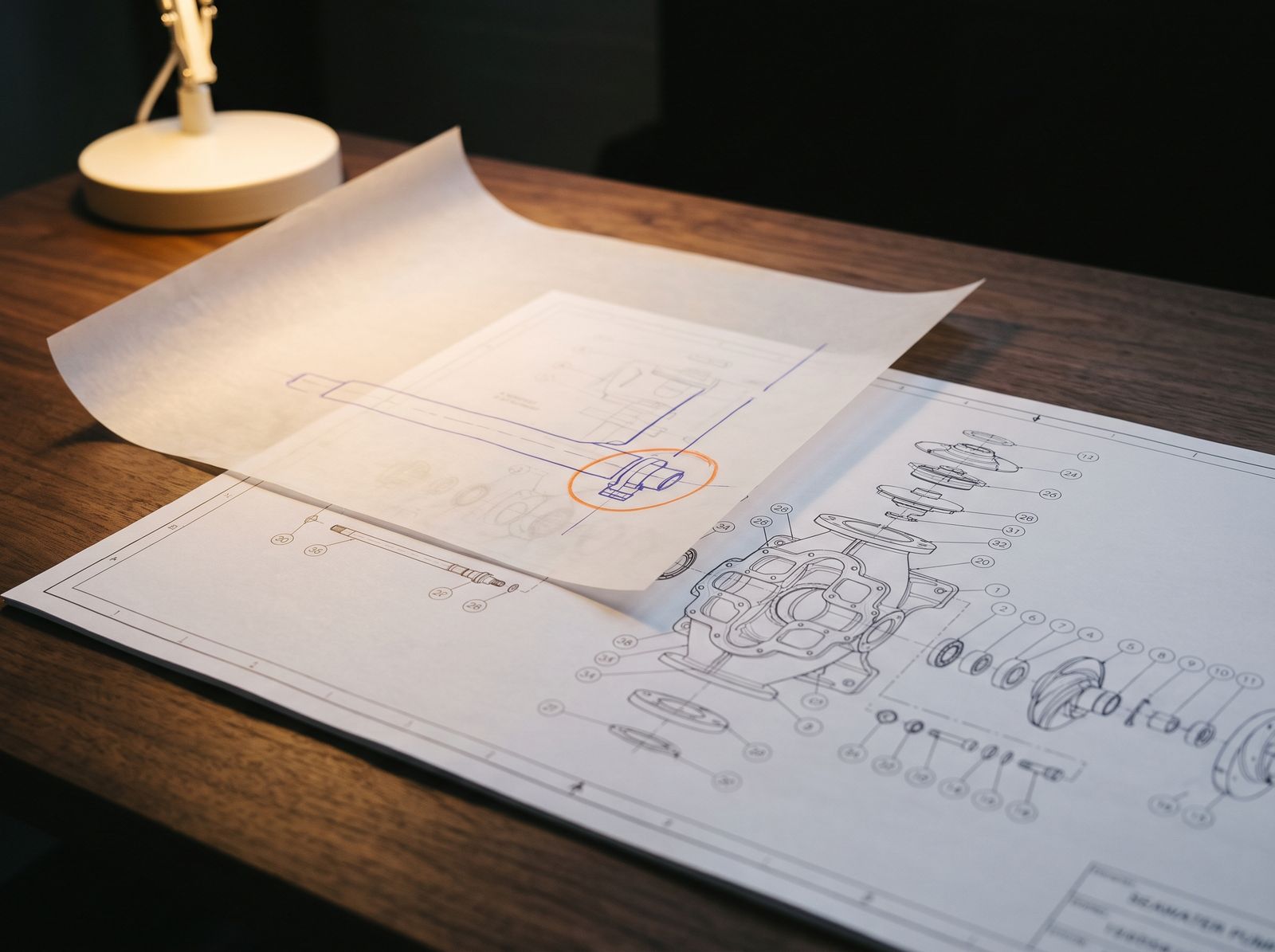
Why every step needs a source.
A general AI writes text. A maintenance procedure needs proof. How traceability turns an AI draft into something an expert can check.
· 5 min read
Why Tracium runs on your servers.
Ship documentation is often controlled data. An AI that reads it has to stay where the data is allowed to be.
Contact
Let’s talk.
See Tracium write a data module
from your own manuals.